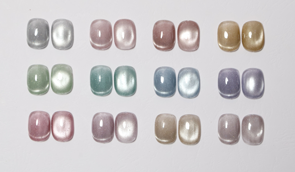
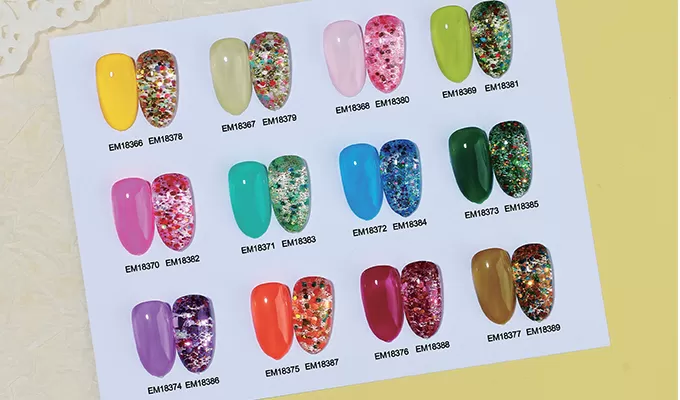
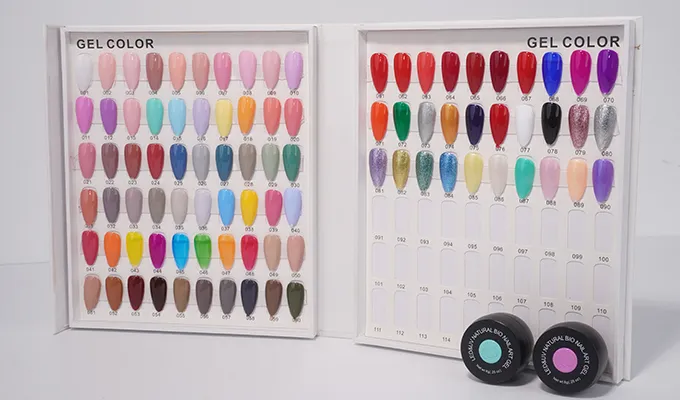
Top Coat Gel is an essential part of a complete gel polish system. It determines whether the finished manicure has a glossy or matte appearance and can also influence surface feel, color protection, wear performance, and the overall user experience.
For nail brand buyers, wholesalers, and distributors, Top Coat Gel should not be selected solely by choosing between “glossy” and “matte.” Buyers must also consider whether the formula requires wiping, how it performs after curing, whether it is compatible with the brand’s color gels, and which sales channel it is intended to serve.This guide compares Standard Top Coat Gel, No Wipe Top Coat Gel, Matte Top Coat Gel, and Tempered Top Coat Gel from a professional sourcing perspective.
A Standard Top Coat Gel is generally used over Color Gel to create a finished surface and protect the color layer. Some formulas leave an inhibition layer after curing and require wiping, while others are formulated as no-wipe products. Buyers should confirm the correct application procedure from the product specification and through testing.No Wipe Top Coat Gel normally does not require the removal of a sticky surface after curing. This can reduce salon application steps and improve working efficiency. However, compatibility with chrome powder, mirror powder, pigments, and other nail decorations can vary between formulas and should be tested separately.Matte Top Coat Gel creates a matte, frosted, or velvet-like finish. Buyers should evaluate more than the absence of shine. Important factors include uniformity, brush marks, surface feel, and whether areas become glossy after wear.Tempered Top Coat Gel is commonly positioned as a high-gloss product with increased surface hardness. Some products are marketed for scratch resistance, but the actual result depends on formulation, layer thickness, curing conditions, and use. Buyers should not assume a performance level from the word “tempered” alone.
| Product Type | Main Finish | Wiping Requirement | Suitable Product Range | Key Sourcing Tests |
|---|---|---|---|---|
| Standard Top Coat Gel | Conventional glossy protection | Depends on the formula | Core gel polish collections | Gloss, adhesion, curing, and removal |
| No Wipe Top Coat Gel | Smooth glossy finish with fewer steps | Usually no wiping | Professional salons and efficient systems | Surface quality, gloss, and decoration compatibility |
| Matte Top Coat Gel | Matte, frosted, or velvet finish | Depends on the formula | Effect and seasonal collections | Matte uniformity, brush marks, and gloss return |
| Tempered Top Coat Gel | High-gloss or higher-hardness positioning | Depends on the formula | Professional high-shine collections | Hardness, scratch performance, yellowing, and cracking |
A nail brand may use No Wipe Top Coat Gel as its core commercial product, Matte Top Coat Gel as an effect option, and Tempered Top Coat Gel as a more specialized high-gloss or reinforced finish.Without verified test data, brands should avoid absolute claims such as “completely scratch-proof” or “will never crack.” Product descriptions should identify the intended performance and specify the conditions under which it has been evaluated.
For professional salon channels, No Wipe Top Coat Gel can improve application efficiency because the technician normally does not need to remove a sticky layer after curing. Brands should clearly state the recommended curing time, suitable UV/LED lamp, and whether the formula is intended for use with decorative powders.For retail and e-commerce channels, instructions must be especially clear. Customers should be able to identify whether the product is glossy or matte, whether wiping is required, which lamp should be used, and whether the formula belongs to a soak-off system.Matte Top Coat Gel can expand an effect collection, but brands should provide realistic product images. Testing and photography over dark colors, light shades, and glitter gels can help customers understand how the final matte effect may differ according to the base color.Tempered Top Coat Gel is generally better positioned as a professional high-gloss or reinforced top coat. Wholesalers should request samples and performance specifications instead of making a decision solely from terms such as “tempered,” “hard,” or “scratch resistant.”Bulk buyers should also evaluate bottle capacity, brush shape, bottle-neck wiping performance, order quantities, and replenishment stability. Keywords such as gel top coat bulk and bulk gel top coat can be used naturally when discussing wholesale purchasing, but they should not be repeated unnecessarily.
Top Coat Gel should be tested as part of a complete system with the intended Base Coat Gel and Color Gel. Testing a top coat on an isolated plastic tip may not reveal compatibility problems between layers.Recommended evaluation points include:
Viscosity and leveling speed during application;
Product pickup and brush-mark performance;
Gloss level or matte uniformity after curing;
Shrinkage, bubbles, dents, or uneven surfaces;
Curing under different UV/LED lamps;
Yellowing over both light and dark colors;
Gloss loss or localized shine after wear;
Compatibility with color gels, builder gels, and decorative materials;
Wear, cracking, lifting, and removal;
Consistency between approved samples and bulk batches.
The U.S. FDA explains that nail products used at home and in salons are generally regulated as cosmetics. Companies are responsible for ensuring that products are safe under labeled or customary conditions of use and for providing warning statements when necessary. Buyers can review FDA Nail Care Products.Products sold at retail in the United States must also meet applicable cosmetic-labeling requirements. FDA provides official information covering ingredient declarations, label claims, net quantity, and related requirements through FDA Cosmetics Labeling.Brands entering the European Union must also consider the Responsible Person, safety assessment, Product Information File, labeling, and CPNP notification. The European Commission describes CPNP as the online notification system created for the implementation of the EU Cosmetics Regulation.
Conclusion: No Wipe Top Coat Gel supports efficient application, Matte Top Coat Gel creates a differentiated effect range, and Tempered Top Coat Gel is generally positioned for high-gloss or reinforced finishes. Buyers should base their decisions on actual formula testing, with particular attention to curing, gloss, matte uniformity, yellowing, wear, and system compatibility.
It normally refers to a formula that does not require the removal of a sticky surface after curing. The actual procedure should still be confirmed through the product instructions and testing.
Not always. Friction, oil contact, formulation, and curing conditions may affect the finish over time, so real-wear testing is important.
The name alone does not prove performance. Surface hardness and scratch resistance depend on the formulation, layer thickness, curing conditions, and use environment.
Complete compatibility should not be assumed. Different systems may produce shrinkage, cracking, gloss loss, or adhesion problems, so combination testing is required.
Confirm the formula type, wiping requirement, finish, capacity, brush, curing conditions, packaging specifications, batch standards, and estimated order quantity.


 English